
On the 28th of January 1875, 108 days after setting sail from Hamburg, the sailing ship Humboldt arrived in Wellington with 400 passengers and crew. This was one of the longest migrant journeys to New Zealand and onboard the ship were my Great Great Grandparents and five of their six children. Sadly, the youngest child (Hilda) was the first of eleven passengers to die on the journey. Their eldest daughter stayed in Sweden. Eight children were born on the ship during the voyage.
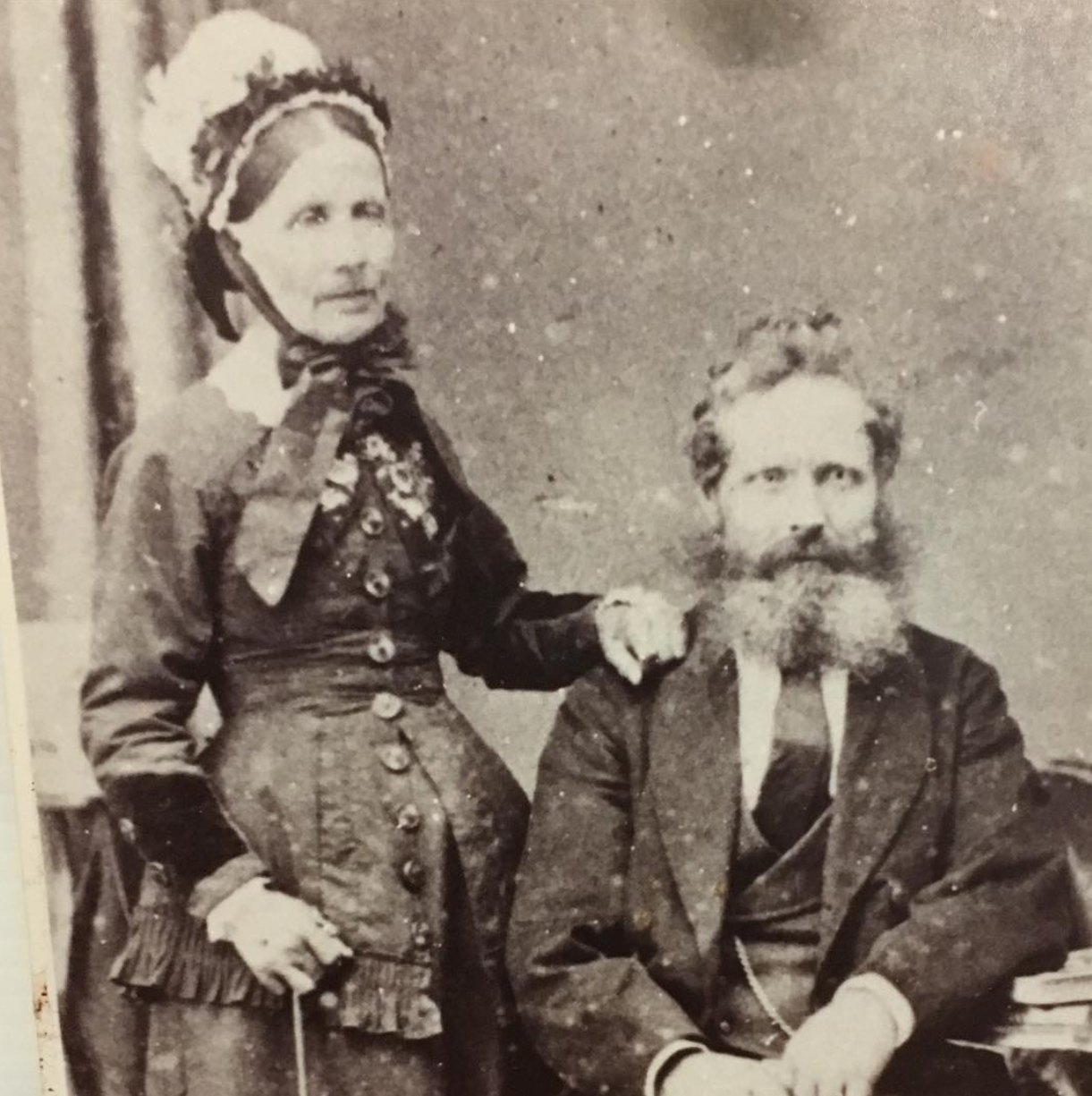
My Great-Great Grandparents, Jöns & Assarina Knutson.
Hamburg wasn’t the start of the journey. They had come from a small village near Angelholm in southern Sweden. I often wonder what made them take this journey and while I don’t know for certain, there were difficult times in Sweden. Several years of crop failures and the sale of oats to Britain to feed horses caused food shortages and the immigration to New Sweden (East Coast of the USA) was becoming more difficult by the 1870’s, making New Zealand more attractive. There was also an effort by The New Zealand Company to attract Scandinavian immigrants to help build infrastructure. The promise of a better life for their family must have paid a big part in the decision to immigrate.
The Humboldt’s logs show that it sailed from Hamburg, Germany, down the western coast of Africa and then across the Indian Ocean below Australia before reaching the southern part of New Zealand and sailing North to Wellington. The weather conditions where often terrible making for a less than comfortable voyage.
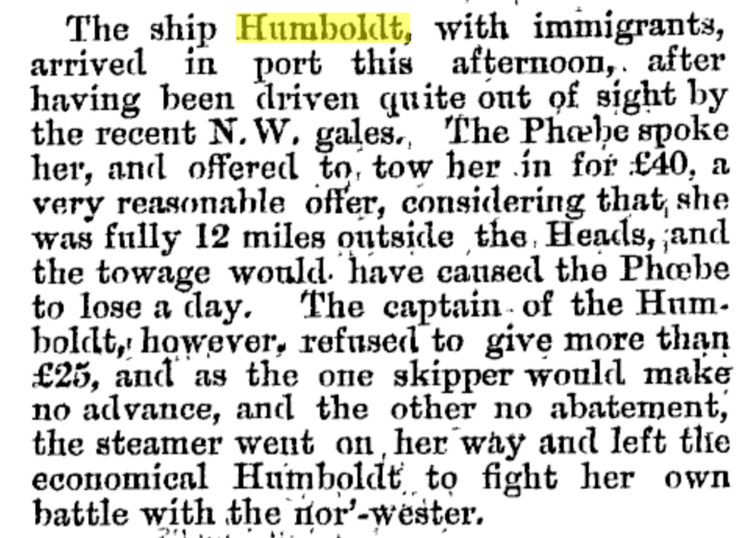
Wellington’s Evening Post newspaper, reported that the Humboldt had battled high winds for several days before entering Wellington harbour. The captain turned down an offer to tow the ship into the harbour by a steamer. The rocky reefs that line the harbour entrance have claimed many ships. Anyone who has crossed Cook Strait on a windy day will have a small appreciation for what this must have been like.
Conditions on the ship itself, sounded better than many of the other immigrant ships arriving from Europe around the same time. This inspection report below gives some insights into the conditions. It is not clear, but it appears that while the ship arrived in Wellington on the 28th January, passengers didn’t disembark until around the 4th of February 1875.

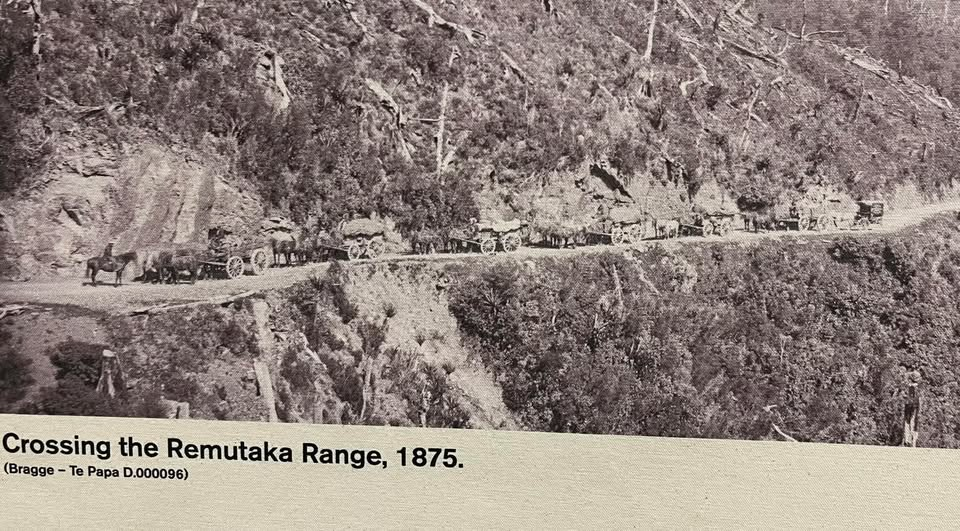
Upon arrival in Wellington, the family travelled to what is now Dalefield (near Carterton) along with other Scandinavian immigrants. The photo below shows the track from Wellington over the Remutaka Ranges that follows the route of the road we drive over today. The immigrants, mostly from Norway and Sweden were here to build a railway line from Wellington to Napier by clearing forests and in return, they received land. It was hard and difficult work, necessary for creating a new life for themselves and there family.
Travelling through the Wairarapa today, you will see towns like Norsewood and Dannevirke that have clear links back to Scandinavia, but it goes much deeper than this as you take the road South to Wellington. My ancestors and those of others of Scandinavian decent, really made their mark.
My family became farmers and shop owners. Knutson’s New World in Carterton stands where the original store was, and the local’s still call it Knutson’s to this day. Have a look in the window of the Greytown museum and you’ll see the shop bike used for deliveries. Many of my relatives are still in the farming business and are well known community members in the Wairarapa and Waikato districts. We definitely love our Holstein Frisian cows (the black and white ones).
In 1902 my Great Grandfather became the manager of the King Solomon Gold mine in Mahakipawa, near the Marlborough Sounds. This is where he met Anders Jonson, also from Sweden. Anders daughter became my Great Grandmother a few years later when they married in 1905.
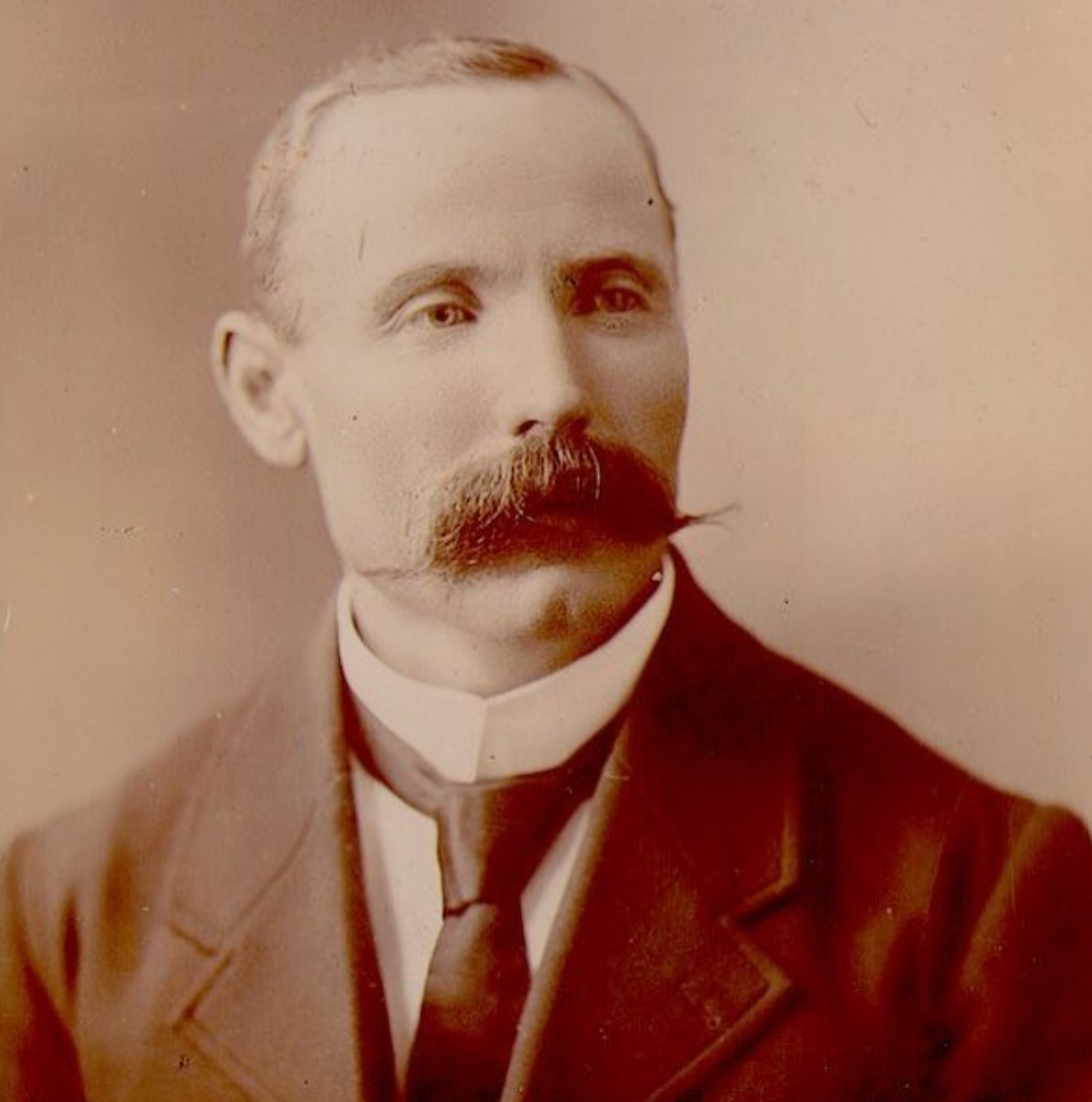
My Great Grandfather Edward (Edvard) Knutson
Hockey is also something that is in the family blood, my Grandfather was one of the first international hockey referees from New Zealand in the 1930’s. I have found records for sports teams from before then and many of my family members are keen players, myself included.

Life must have been difficult. Travelling to almost as far from home as you could possibly go. Leaving their eldest daughter behind, knowing they would never see her again. Losing a child on the voyage and burying them at sea. Once they arrived in New Zealand, there was little support an challenging when you didn’t speak English.
Scandinavian children were banned from speaking their native language in schools and it was frowned upon in public. They had to blend into a community very different to the one they had come from. The same is true for other immigrant groups arriving from other non-English speaking parts of Europe and Asia. Imagine a sharp whack across your knuckles with a ruler (or worse) for saying something in your native tongue.
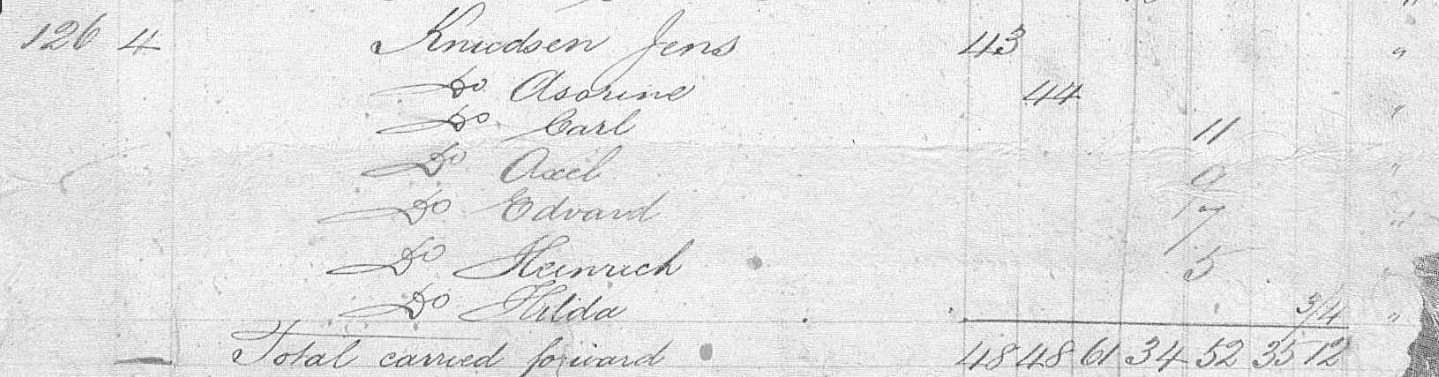
One small but never the less interesting fact about my surname, is that it was misspelt both in Denmark, when the immigration papers spelt in Knudsen (the Danish spelling) and that the second ‘s’ was dropped. This was incorrectly spelt again in various official documents once they reached New Zealand. Is it Knutsen, Knudsen, Knedsen or Knudson? The correct spelling is actually Knutsson, but we ended up with Knutson (the anglicised version). It has only been in recent years that many people have asking how to pronounce my name without being corrected.
Today, 150 years after they arrived in New Zealand, I would like to think my Great-Great Grandparents are looking down at their descendants with pride. We have made ourselves a good home here and contributed to the building on New Zealand. We still work hard and have achieved many things they can be proud of in the farming, business, conservation and sport.
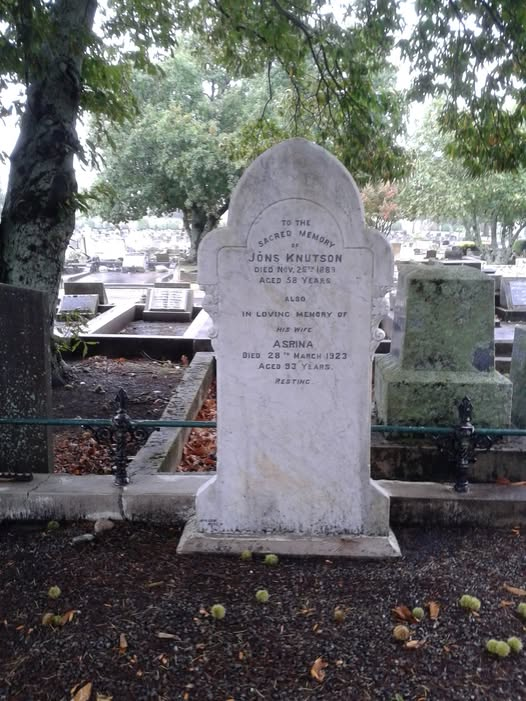
My Great-Great Grandparents grave and headstone. Sadly, My Great-Great Grandfather Jöns died just 14 years after arriving in New Zealand.
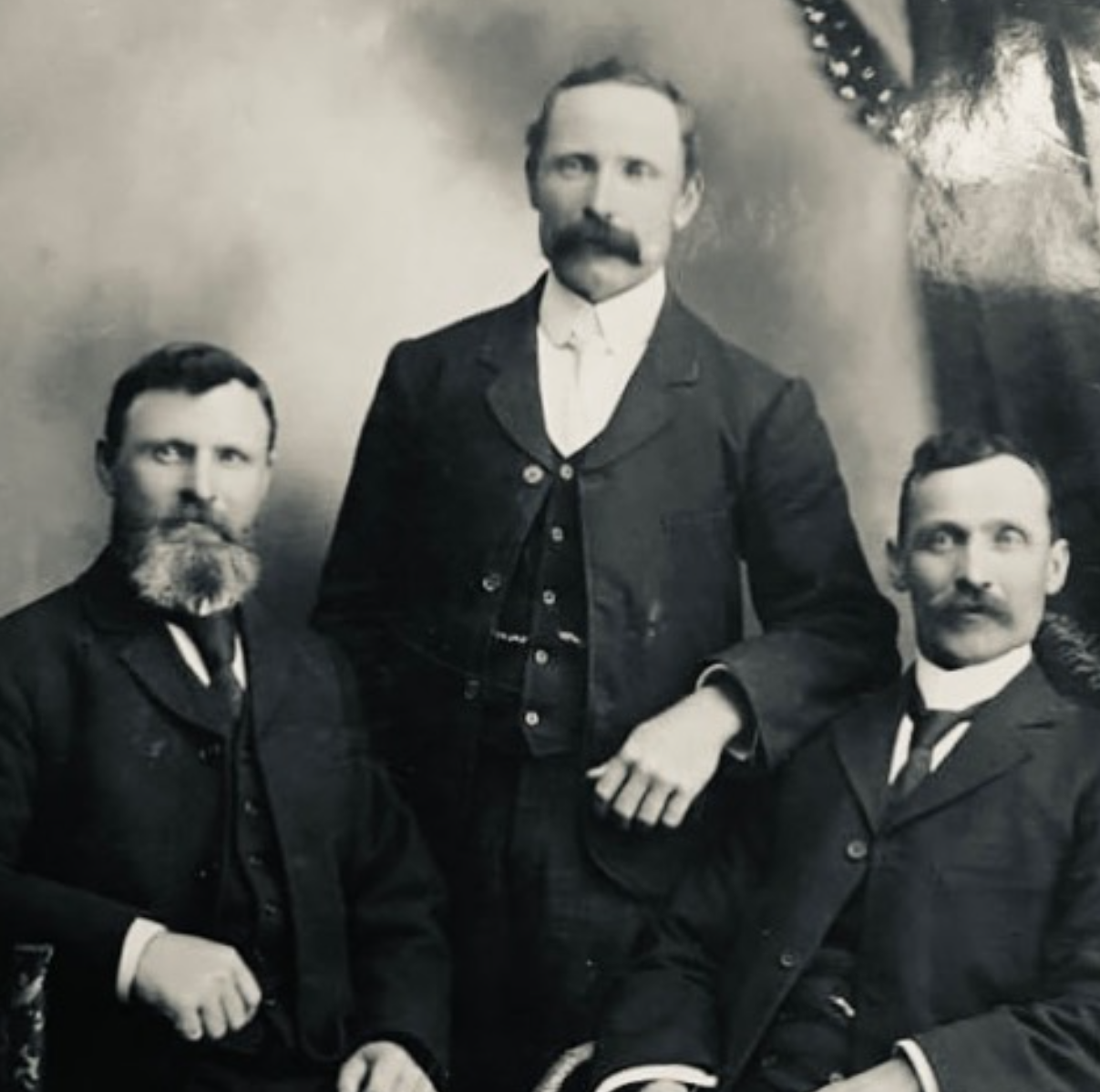
My Great Grandfathers brothers Axel, Ted and Harry Knutson, looking very sharp!
During the 1870’s, approximately 1,400 Swedish people immigrated to New Zealand (5,000 from all Scandinavian countries). According to the My Heritage website, 40-45% of New Zealanders have some Scandinavian DNA, making us the second largest part of New Zealand’s ethnic mix, after people with British, Scottish, Welsh and Irish DNA. This is of course due to my earlier ancestors making a shorter journey across the North Sea in the Viking age, resulting in a strong NDA link to the United Kingdom.
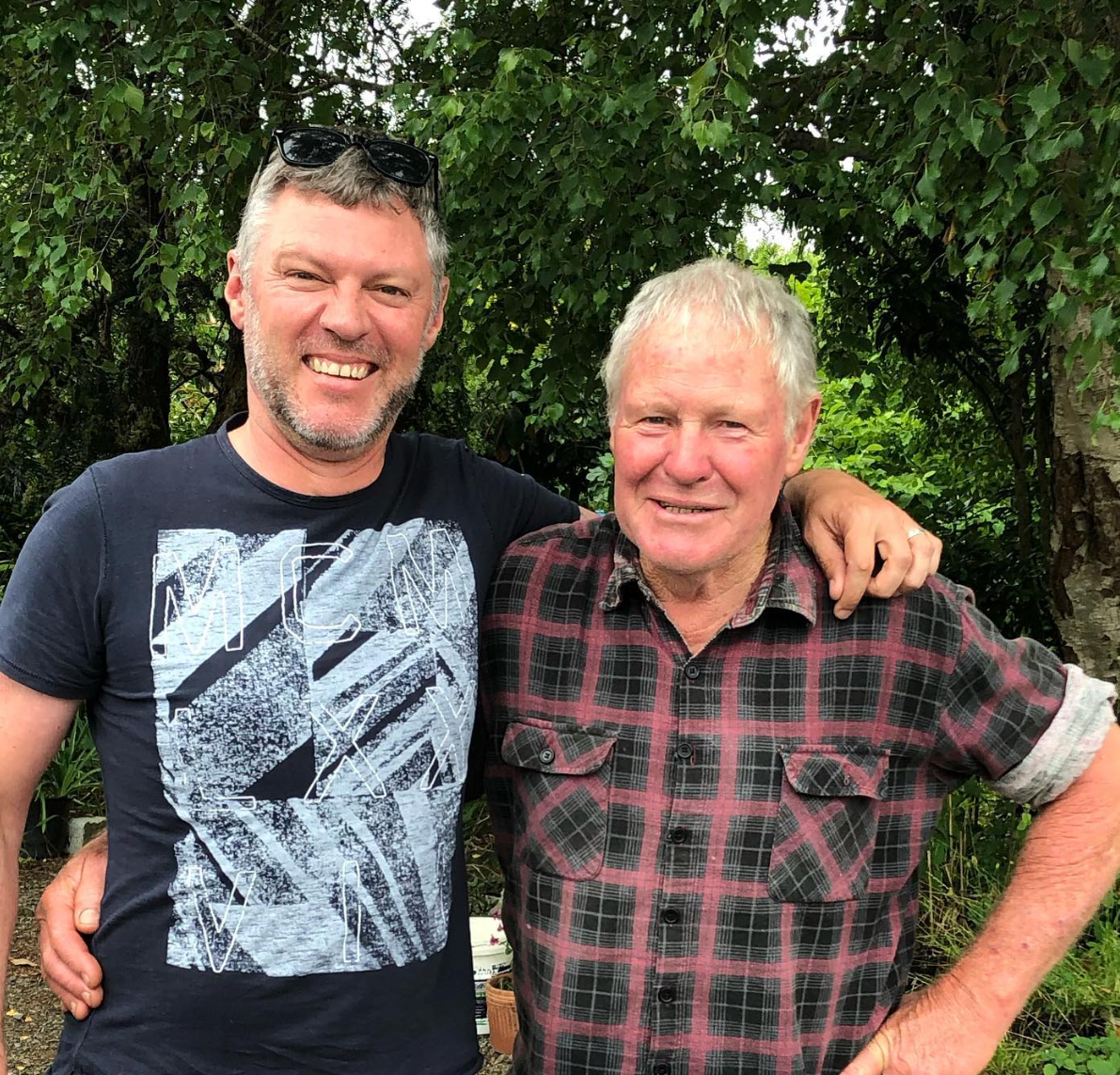
Me and my Dad
I am thankful for the journey made by my ancestors and proud to be a Kiwi of Swedish descent. Learning the language and embracing the culture of my ancestors is now a big part of my own life.
Med vänliga hälsningar (with kind regards),
Steve Knutson
Discover more from SharePoint Moments
Subscribe to get the latest posts sent to your email.

Well, done Steve. I hear you are offshore at the moment. A couple of points Jens lived 14 years in NZ. it was sad that he was not able to see the difference he made by immigrating. Small matter really.
They also had two more children born in Sweden, Hilda born 20 February 1866 – died 1869. Bengt born 5 September 1871 whom died the same day. Both born and died in Válinge. During Assarina’s lifetime she would have had to deal with the deaths of 3 babies and two adult children, with another 3 Grandchildren dying in Sweden. How lucky we have all been.
We have so much to be thankful for. Janet
Thank you Janet, I have made a small update to fix that up.
That is a lot for Assarina to go through in her life. It is hard to imagine these days how that life must have been. We are very lucky indeed.
Hi! I found your blog when I was searching for information about my great-grandfather Laurits Andreas Jepsen who came with the same ship, Humboldt, as your relatives to New Zealand in 1875. Can you give me some tips on where I can find passenger lists and how I can find him further in documentation in New Zealand. My relative came from North Jutland in Denmark and I myself have lived in Sweden for many, many years. I would be infinitely grateful for any help in order to be able to move forward in my search for him.
Lis Thomsen from Sweden
Hi Lis, this website is a good place to start for passenger lists. https://www.familysearch.org/en/wiki/New_Zealand,_Archives_New_Zealand,_Passenger_Lists_-_FamilySearch_Historical_Records
The Humboldt arrived in January 1875 and I understand it dropped immigrants off in several locations.
The historic newspaper search might also help finding information. https://paperspast.natlib.govt.nz/newspapers
I hope this helps.
Steve
Archives New Zealand also has a document search that might help. https://collections.archives.govt.nz/en/web/arena/search#/?q=Laurits
Thank you so much for your help! I will keep on searching 🤗